
Charleston

Outlines of enslaved Africans at International African American Museum, Charleston; (c) IAAM/Joshua Parks
From slavery, revolt & Civil War battles, to celebrated landscaping and “pan-slapping good” cuisine, Charleston is a daring look at America’s past that helps us navigate to a more inclusive future.
History
Slaves were over half the city’s population during the American Revolution
Cultural Sites
The International African American Museum is a must-visit to understand our arrival
Restaurants
Charleston offers a nice selection of Gullah, Soul Food, and Caribbean options

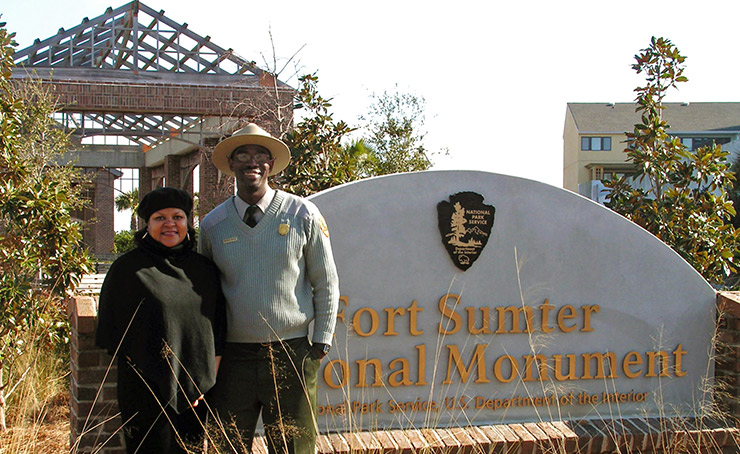
Kalin Thomas visiting Fort Sumter National Monument; (c) Soul Of America
Low Country Cuisine
The West African influences on Low Country Cuisine are compelling
Shops & Galleries
When all else fails there’s always the Sweetgrass Basket ladies
Denmark Vesey Uprising Against Slavery
Captain Joseph Vesey, an old resident of Charleston, commanded a slave ship
Colored Troops Glory Assault on Fort Wagner

In July of 1863, the 54th Massachusetts Colored Troops were led by Colonel Robert Gould Shaw

Couple on the beach boardwalk in Charleston; (c) Charleston CVB
Places of Worship
Emanuel AME Church stands out among the group of historic Black churches
Historic Sites
Catfish Row, Denmark Vesey Residence, and Aiken-Rhett House are must-visits
Family Attractions
South Carolina Aquarium and Charleston Waterfront Park are front-runners
General Attractions
Exchange and Customs House held patriots prisoner during the Revolutionary War

Denmark Vesey Monument sculpted by Ed Dwight; (c) ProfReader/Wiki Commons
The Arts
Gibbes Museum of Art and Dock Street Theatre are worthy of a few hours
Jazz & Dance
Jazz was evolving simultaneously in Charleston and New Orleans
Trivia & Famous Residents
Denmark Vesey, Gullah Jack Pritchard, and Philip Simmons come to mind